
Most Common Employment Practices Liability Claims by Catering Companies
The Employment Practices Liability claim picture for Catering Companies — frequent vs severe claim patterns, cost per claim, root causes, completed-operations exposure, and the strategies that produce measurable claim reduction over time.
Get a Free Quote →QUICK ANSWER
Catering Companies Employment Practices Liability claim experience reflects the premises-and-product-driven loss patterns of retail or hospitality. A handful of recurring claim types account for 70-85% of claim count; severity claims account for most paid dollars. Typical per-claim costs: $1K-$15K (low), $15K-$100K (mid), $100K-$1M+ (high/rare). Strong risk management can reduce claim frequency 30-50% over 2-3 renewal cycles.
The Employment Practices Liability claim landscape for Catering Companies
For Catering Companies, the Employment Practices Liability claim landscape includes claims that surface during operations and claims that emerge years after work is completed. The distribution between these tends to be roughly 50-70% during-operations and 30-50% completed-operations, depending on the specific class within retail or hospitality.
Knowing the claim mix matters operationally because risk-reduction efforts pay back differently for different claim types. Reducing frequent low-severity claims affects loss ratios immediately; reducing rare high-severity claims affects long-term reserves and reinsurance treaties.
High-severity Catering Companies claims on Employment Practices Liability
Severe Employment Practices Liability claims for Catering Companies are rare per account but substantial when they occur. The premises-and-product-driven loss pattern of retail or hospitality produces occasional severe claims — typically $250K+, sometimes reaching $1M+ — that dominate the total paid amount in any given period.
Carriers price severity into the per-occurrence limits and the umbrella structure. The standard recommendation for most Catering Companies: $1M-$2M primary limits stacked with umbrella sufficient to cover plausible severe-loss scenarios. Operations with higher exposure should size limits accordingly.
Recent claim trends affecting Catering Companies on Employment Practices Liability
The retail or hospitality segment's claim picture continues to evolve. Newer claim types are emerging in some Catering Companies (cyber-related claims, supply-chain claims, regulatory-action claims) while traditional claim types persist or grow.
For underwriting, this means carriers continually refresh their view of the segment. A claim type that was rare in 2020 may be price-loaded into the 2026 base rate; conversely, claim types that have receded may produce small price relief in classes where they once dominated.
The most expensive Employment Practices Liability claim types for Catering Companies
The most expensive Employment Practices Liability claim categories for Catering Companies aren't always the most frequent. For most Catering Companies, a small number of claim types account for the majority of paid dollars — typically 2-4 categories that combine moderate frequency with significant severity.
Risk management focused on these categories pays back disproportionately. A 25% reduction in the highest-cost claim category produces more loss-ratio improvement than a 25% reduction across all categories proportionally.
The long-tail claim risk for Catering Companies on Employment Practices Liability
For Catering Companies, completed-operations exposure on Employment Practices Liability requires deliberate management. Policy language varies — some forms extend completed-ops coverage for 2-5 years after work; others terminate it at policy expiration. The choice has significant implications for long-tail claim coverage.
Strong placements include completed-operations coverage that survives policy termination — either via claims-made forms with adequate tail, or occurrence forms with completed-ops extensions. Without one of these, the catering company carries uninsured exposure for completed work.
Comparing Catering Companies loss experience to peers
Catering Companies claim experience on Employment Practices Liability can be benchmarked against the broader retail or hospitality segment. Carriers maintain class-average loss ratios that establish "normal" for the segment; individual accounts sit above, at, or below that average.
For a typical catering company, the goal is consistent below-average performance. Below-average loss ratios produce experience-modifier credits, schedule-rating credits, and competitive renewal markets. Above-average performance produces the opposite.
How Catering Companies reduce Employment Practices Liability claim frequency
The Catering Companies that consistently outperform on Employment Practices Liability loss experience treat claim reduction as a continuous operational priority, not a quarterly review item. Daily practices (toolbox talks, JSAs, quality checks) accumulate into measurable claim-rate differences over time.
The ROI on claim-reduction investment is typically strong. A $25K annual investment in safety programs producing a 25% reduction in claims on a $100K loss base saves $25K/year and improves experience modifiers permanently. The compounding over multiple years is substantial.
Get a Free Insurance Quote
50+ carriers. One advisor. One recommendation built around your business — no obligation.
Get My Free Review →DEEP-DIVE GUIDES
Detailed coverage guides
Drill deeper on the specific aspects of this coverage that matter to your business.
Cost & Pricing
Need & Requirements
Coverage Detail
How to Get Coverage
Looking for the full picture? See Employment Practices Liability for Catering Companies.
WHY COVERAGE AXIS
Why Coverage Axis
Insurance Carriers
Access to a broad network of A-rated carriers competing for your business — your advisor handles the rest.
COI Turnaround
Certificates and additional insured endorsements delivered the same day you need them.
Years of Experience
Our advisors specialize in commercial insurance — we understand your industry inside and out.
Cost to You
Getting a quote is always free. No hidden fees, no obligation — just straightforward coverage advice.
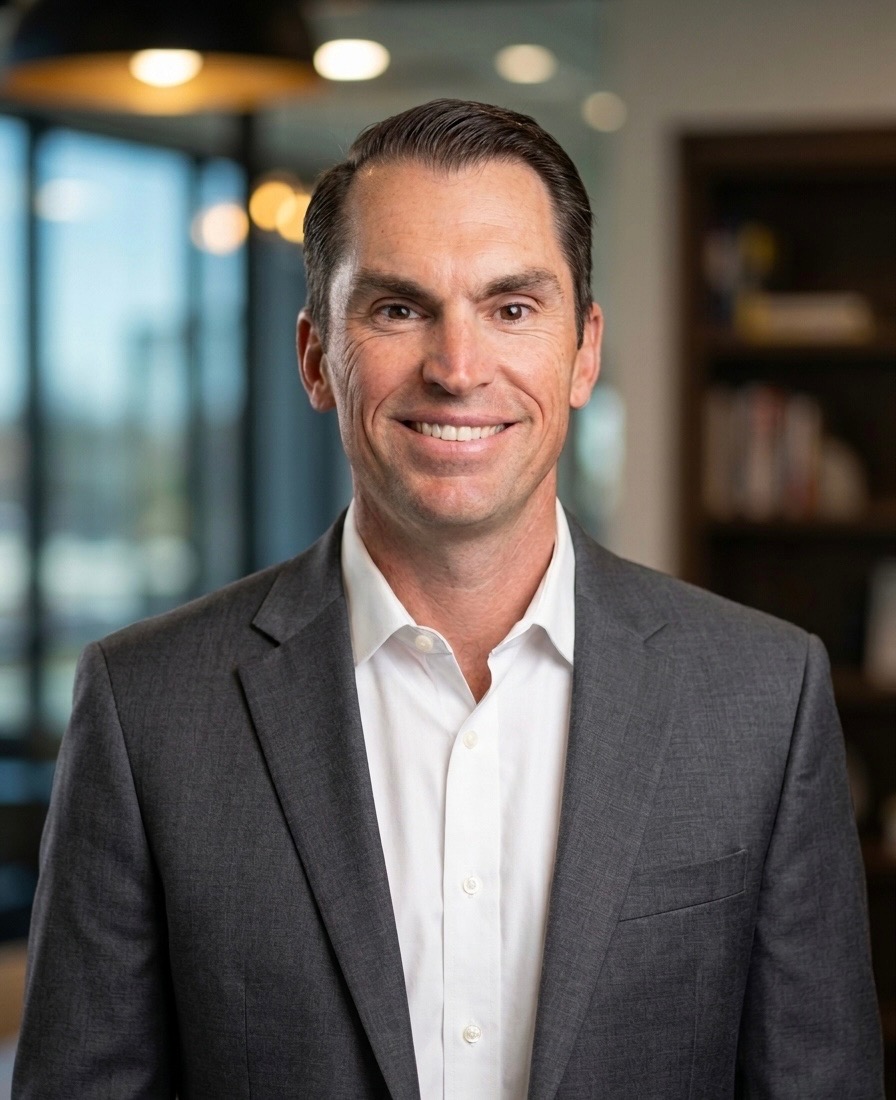
YOUR ADVISOR
Chris DeCarolis
Senior Commercial Insurance Advisor
Chris DeCarolis is a Senior Commercial Insurance Advisor at Coverage Axis. His experience in commercial risk placement started in 2007. He has helped contractors, trades, and specialty businesses build coverage programs that fit their operations — specializing in general liability, workers comp, commercial auto, and umbrella programs for high-risk industries. Chris holds a Florida 220 General Lines license (G038859) and is a graduate of Brown University.
COMMON QUESTIONS
Frequently Asked Questions
The mix reflects retail or hospitality's premises-and-product-driven loss patterns. A handful of recurring claim types account for 70-85% of frequency; severity claims account for most paid dollars. Specifics vary by sub-class.
Claims surfacing after the catering company finished the work. For retail or hospitality, completed-ops claims often drive significant paid dollars despite lower frequency. Policy language must explicitly cover them.
Training programs, pre-work hazard identification, quality control on completed work, subcontractor management, and active claim handling. Well-implemented programs reduce frequency 30-50% over 2-3 years.
Severity inflation continues; social inflation drives jury awards higher on certain claim types; some newer claim types (cyber, supply-chain) emerging. Carriers reprice the segment continuously.
Recurring root causes: communication failures, procedural shortcuts under time pressure, equipment maintenance issues, and personnel issues (training/fatigue/turnover). Root-cause analysis surfaces patterns specific to each operation.
GET STARTED
Get a Free Insurance Review
Tell us about your business and a licensed advisor will recommend the right coverage.
Get My Free Review →GET STARTED
Tell Us About Your Business
Fill out the form below and a licensed advisor will review your situation and recommend the right coverage — no obligation.