
A plumber's van gets clipped on the way to a service call. At first, it looks routine. Then the questions start. Was the van titled to the business? Was the driver on the clock? Were materials in the vehicle for a paying job? Did the policy cover business use, or was it written like a personal auto policy?
That's where a lot of contractors find out the hard way that a work truck isn't just transportation. It's part of the operation. If that vehicle causes injuries or damages someone else's property, the claim can reach far beyond a repair bill. It can hit contracts, cash flow, and personal assets if the business isn't set up correctly.
For contractors, commercial auto liability insurance isn't just another certificate to file away. It decides whether your business can absorb a bad road accident and keep working the next morning.
Table of Contents
- Why Your Work Truck Needs More Than Personal Auto Insurance
- What Commercial Auto Liability Actually Covers
- Essential Coverages Beyond Basic Liability
- Combined Single Limits vs Split Limits
- Meeting State and Project Insurance Requirements
- How Commercial Auto Premiums Are Calculated
- Lowering Costs and Comparing Policies The Right Way
Why Your Work Truck Needs More Than Personal Auto Insurance
A plumber sends a tech to a leak repair in a company van. On the way, the van rear-ends one car and pushes it into another. Nobody at the shop thought much about insurance that morning. By lunch, three carriers are calling, one injured driver is talking about missed work, and the business owner is trying to figure out whether the policy in the glove box fits a commercial operation.
That's the difference between personal and commercial use in practice. A contractor's vehicle isn't just used for errands or commuting. It carries ladders, pipe, fittings, compressors, saws, and employees. It goes to active jobsites, crowded parking lots, and delivery yards. It may tow trailers, move equipment, or pull into places where a standard personal policy was never designed to respond.
For a contractor, the vehicle is a revenue-producing asset. If it causes a serious accident, the issue isn't limited to body shop damage. The claim can affect whether the business can stay on a project, renew a policy, or qualify for the next bid.
A work vehicle creates business liability every mile it's driven for the company.
Personal auto insurance often breaks down when the vehicle is tied to business operations. That leaves contractors exposed at the exact moment they assume they're insured. A van wrapped with company branding, loaded with tools, and dispatched to paying jobs creates a very different risk profile than a pickup used for weekend errands.
That's why contractors usually need a policy built around business use, business ownership, and business liability. It also needs to fit the rest of the insurance program, especially if the company is already reviewing what insurance contractors typically need across jobsites, vehicles, and crews.
When the vehicle accident becomes a business problem
A roofing contractor doesn't just face the cost of an accident. The contractor may also face:
- Contract trouble: A general contractor can ask for updated proof of coverage before letting crews back on site.
- Cash flow pressure: A serious liability claim can tie up reserves, legal attention, and management time.
- Asset exposure: If the business structure and insurance don't line up, owners can end up relying on personal resources to fight a business claim.
Commercial auto liability insurance exists to stop a vehicle accident from turning into a business-ending event.
What Commercial Auto Liability Actually Covers
A tech leaves your shop in a company van, rear-ends a car at a stoplight, and the other driver ends up with injuries, a totaled vehicle, and a lawyer. That is the claim commercial auto liability is built for. It pays when your business is held legally responsible for bodily injury or property damage caused by a covered vehicle in your operations.
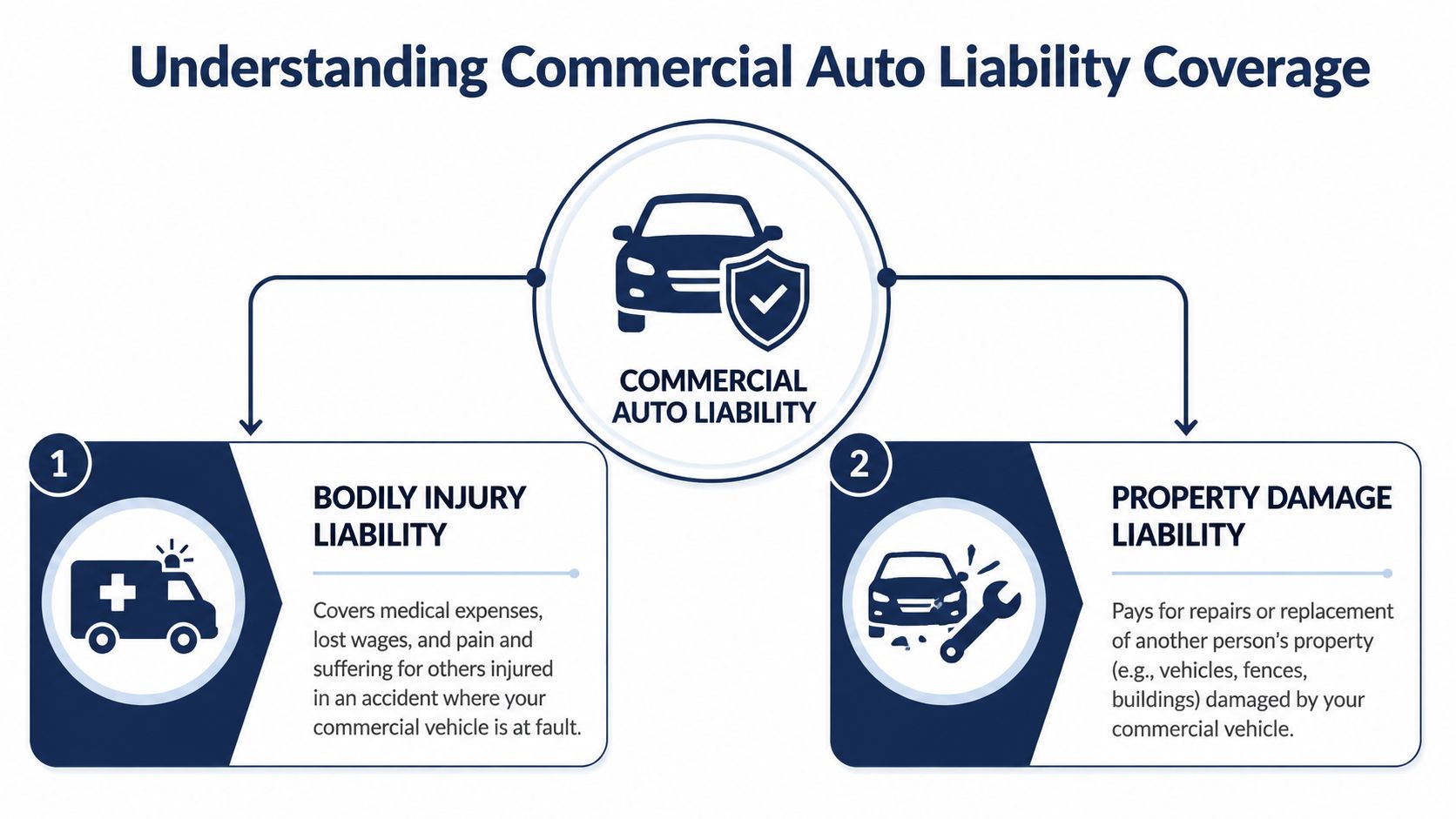
For contractors, that usually means two things at once. First, the policy pays to defend the claim. Second, it pays damages your business owes to other people, up to the policy limit. If you want a plain-English outside explanation of liability coverage for accident claims, that overview helps, but your policy language controls what is covered.
Many contractors carry a $1,000,000 combined single limit because owners, general contractors, and commercial clients often expect to see that amount on the certificate. The Insurance Information Institute explains combined single limit coverage, and in practice it gives contractors one pool of liability money for injury and property damage from a single accident. That matters on a bad loss, where medical bills and vehicle damage hit the claim at the same time.
The two parts that matter most
Bodily injury liability covers injury claims brought by other people after your driver causes an accident. On a real claim, that can include medical treatment, lost income, legal costs, and a settlement or judgment.
Property damage liability covers damage to property that does not belong to you. Contractors see this go beyond another car. A truck can back into a storefront, shear off a gate arm, damage a fence at a jobsite, or crush a customer vehicle in a parking lot.
One landscaping crew gives a clear example. The driver cuts a turn too tight in a retail lot, clips a parked sedan, and knocks down a light pole. The same accident creates property damage to the car and the lot owner's equipment. If someone is hurt while trying to get out of the way, bodily injury liability is part of the same claim.
That distinction matters because contractors often mix up auto liability with other policies. Auto liability responds to third-party vehicle claims. It does not replace general liability insurance for contractors, which applies to a different set of jobsite and business risks.
What this policy does not pay for
Commercial auto liability is narrower than many owners expect. It generally does not pay for:
- Damage to your own truck or van: That falls under collision or other physical damage coverage if you bought it.
- Your tools, materials, or equipment in the vehicle: Those losses are usually handled under inland marine or a property policy.
- Injuries to your own employees: Workers compensation usually applies if the injury happened in the course of work.
- Every vehicle connected to your business: Coverage depends on how the policy is written and which autos are covered.
That last point causes expensive misunderstandings. If your policy is set up only for owned vehicles, a claim involving a borrowed pickup, rental truck, or employee-owned vehicle used for company business may not be covered the way you expect. Before you focus on price, check which vehicles and liability situations the policy includes.
Essential Coverages Beyond Basic Liability
A standard liability limit can look solid on a certificate and still leave a contractor badly exposed. The gap usually shows up when the vehicle involved in the accident isn't one of the scheduled company units.
An HVAC company owner tells a technician to grab emergency parts on the way to a no-cool call. The technician uses a personal pickup because the company van is tied up. On the return trip, that pickup causes an accident. The business is named in the lawsuit because the errand was for company business. That's where many contractors learn a painful lesson. Standard commercial auto policies explicitly exclude liability for accidents involving personal, rented, or leased vehicles used for business purposes, and that gap is one of the most common uncovered risks for contractors, especially when crews use personal vehicles to reach jobsites, as noted by Coverage Axis.
The hired and non-owned auto gap
This coverage matters any time the business relies on vehicles it doesn't own. For contractors, that happens more often than they think.
Common examples include:
- Employee-owned vehicles: A service tech uses a personal truck to pick up materials.
- Rented vehicles: A roofer rents a box truck for a tear-off and haul-away job.
- Leased or borrowed units: A subcontractor borrows a truck for a short-term project push.
Without hired and non-owned auto liability, the business can still get pulled into the claim even though the vehicle itself isn't listed on the company policy. Contractors in HVAC, landscaping, electrical, restoration, and roofing run into this exposure constantly because crews move between shop, supplier, and jobsite all day.
If an employee uses a personal vehicle for a company errand, the business can still get sued even though the title isn't in the company name.
Why coverage symbols matter on contractor policies
Contractors also need to pay attention to coverage symbols, not just limits. Purchase agreements can demand specific auto symbols. One strict requirement appears in contractor agreements that call for Symbol 1, Any Auto, with a minimum $1,000,000 combined single limit per occurrence because that structure can include hired and non-owned vehicles needed for contract compliance, as outlined in contractor auto requirements from Loyola University New Orleans.
That matters on real jobs. A roofing contractor might rent a truck for one large tear-off. If the agreement requires broad auto coverage and the policy only applies to scheduled owned vehicles, the contractor can fail the insurance requirement before the first dumpster is loaded.
Some higher-risk fleets or harder-to-place accounts may need specialty market solutions to fill those gaps correctly. That's where contractors sometimes end up looking at excess and surplus insurance options when standard placement isn't clean.
Combined Single Limits vs Split Limits
A crew truck leaves the jobsite, runs a red light, and crushes a late-model pickup pulling a trailer. One person goes to the hospital. The other vehicle is a total loss, and the trailer and equipment are damaged too. That is where limit structure stops being insurance jargon and starts affecting your balance sheet.
A lot of contractors focus on the top number and miss the way the policy pays. With auto liability, the amount matters, but the layout of that amount matters too.
A Combined Single Limit gives you one pool of money for bodily injury and property damage from a single accident. Split limits divide those payments into separate caps, usually one cap per injured person, one cap per accident for bodily injury, and another cap for property damage. If one part of the claim gets large fast, split limits can leave a hole even when the total package looked adequate on the quote.
The contractor standard is often a $1,000,000 CSL because it gives the claim handler more room to respond to the way real accidents develop. A practical explanation of that setup appears in this guide to combined single limit coverage for business auto policies.
How the payout structure changes the claim
With CSL, the carrier can apply the full limit wherever the loss lands. If injuries are modest but the other vehicle, attached equipment, storefront, or highway barrier damage is severe, the policy is not boxed in by a separate property damage cap.
Split limits are less forgiving. A contractor might carry a policy that looks strong on paper, then find out the property damage portion is the weak point. That shows up in claims involving expensive pickups, loaded trailers, utility structures, or chain-reaction crashes.
| Coverage Feature | Combined Single Limit ($1M CSL) | Split Limit ($500k/$1M/$100k) |
|---|---|---|
| Bodily injury and property damage | One combined pool applies to both | Separate caps apply to each category |
| Flexibility after a severe accident | High flexibility | Limited by category caps |
| Major vehicle damage claim | Can draw from the full limit | Property damage can hit the $100k cap quickly |
| Public project compatibility | Commonly preferred | Can be rejected if specs require CSL |
| Out-of-pocket risk to contractor | Lower when losses are uneven | Higher when one damage type exceeds its cap |
Here is the practical trade-off. A split limit can sometimes cost less. For a contractor trying to control premium on older service vans, that lower price can look attractive. But if your work puts heavier trucks on the road, pulls trailers, or sends drivers into dense traffic and tight urban streets, the cheaper structure can become the expensive choice after one bad accident.
I usually tell contractors to match the limit structure to the kind of damage they can cause, not just the minimum their agent can quote. If one crash could destroy a customer vehicle, damage a gate, take out a section of fencing, or injure multiple people, CSL usually gives your business a cleaner and safer answer.
That is also why many public owners and general contractors ask for CSL in contract documents. They want to see one accident limit that can respond without getting trapped inside separate sublimits. For your business, that can be the difference between a claim that stays inside the policy and a claim that turns into an uncovered business debt.
Meeting State and Project Insurance Requirements
A contractor doesn't usually get to pick auto liability requirements in a vacuum. State law sets one floor. The project contract often sets a higher one.

State rules can force higher limits
Vehicle weight plays a major role in commercial auto requirements. Heavier units create bigger loss potential, so states increasingly tie minimum liability obligations to Gross Vehicle Weight Rating.
A strong example is New Jersey. New Jersey now requires a minimum of $1,500,000 in liability coverage for many commercial vehicles, which shows how heavier vehicles can trigger higher compliance costs and stricter underwriting review. For contractors running dump trucks, flatbeds, concrete mixers, or other heavier units, that's not just an insurance issue. It's an operational requirement.
A paving contractor may own excellent equipment and have steady work lined up, but if the fleet doesn't meet the state minimum, the trucks can't legally support the business the way the owner expects.
Project paperwork can block the job before work starts
Project requirements often move even faster than state enforcement. A general contractor on a commercial build may require each electrical, plumbing, roofing, and framing subcontractor to show a certificate of insurance before badging crews onto the site. If the contract asks for $1,000,000 combined single limit, broad auto symbols, or coverage that includes hired and non-owned vehicles, the subcontractor needs the policy to match before the certificate is issued.
That's why contractors should check these items before bidding:
- Vehicle schedule and use: Make sure every owned unit is correctly listed and described.
- Liability structure: Confirm whether the contract asks for CSL instead of split limits.
- Hired and non-owned exposure: Review whether employees, rentals, or borrowed vehicles are part of operations.
- Certificate wording: The policy has to support what the certificate shows.
A contractor can lose a job with the right crew and the wrong insurance language.
Commercial auto liability insurance isn't just about surviving claims. It's also about remaining eligible to work under state rules and signed project agreements.
How Commercial Auto Premiums Are Calculated
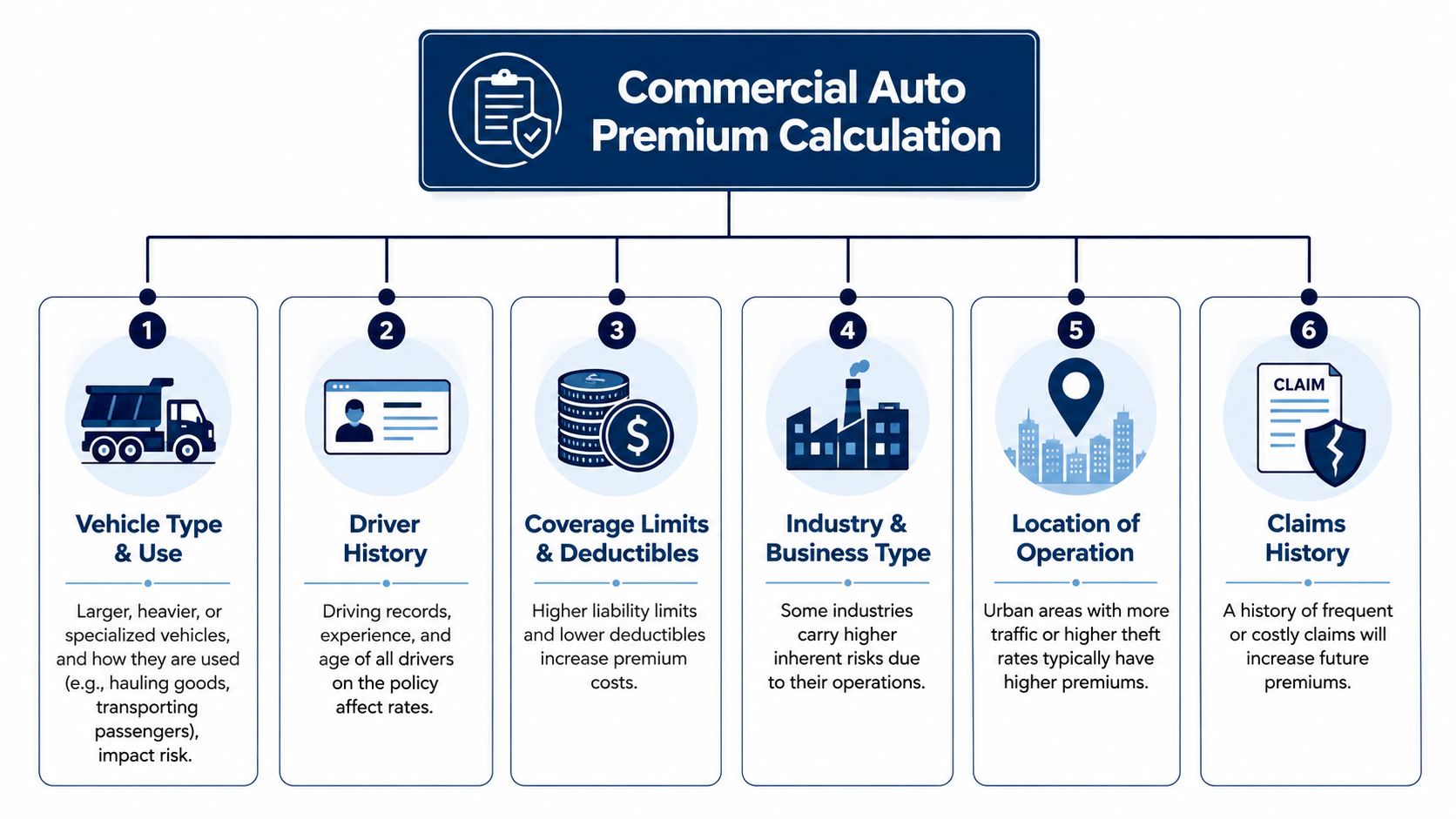
Commercial auto pricing isn't random. Underwriters charge based on the kind of loss a fleet is likely to produce. For contractors, that starts with what the vehicles are, who drives them, where they go, and how they're used during the workday.
For construction businesses, commercial auto insurance can range from $1,000 to over $3,000 per vehicle annually. The same source notes that a concrete contractor with three heavy-duty dump trucks might pay over $8,000 per year, while an HVAC tech with one cargo van could pay around $1,200. That spread makes sense when the exposure is broken down.
What underwriters look at
Some rating factors are obvious. Others get missed until renewal comes back higher than expected.
- Vehicle type and weight: A cargo van and a dump truck don't create the same severity potential.
- Driver records: Clean motor vehicle records usually help. Violations and poor loss history make placement harder.
- Use of vehicles: Local service work, material hauling, and jobsite travel all create different patterns of exposure.
- Business type: An electrician with light vans presents a different risk than a concrete company moving heavy material.
- Territory and operating area: Dense traffic, difficult parking, and longer road time increase exposure.
- Claims history: Prior losses tell underwriters how the account has performed.
A contractor who wants a broad overview of heavy vehicle pricing factors can compare those ideas with this guide to HGV driver insurance, especially when the fleet includes larger units.
Why one contractor pays more than another
Take two trade examples.
An HVAC contractor with one cargo van typically runs service calls, carries hand tools and parts, and operates a lighter vehicle profile. A concrete contractor may run heavy-duty trucks, haul weight, and put vehicles into tighter, rougher site conditions. Those heavier units often produce larger third-party damage potential, and the rating reflects that.
The market pressure behind those premiums is real. In 2024, the U.S. commercial auto liability sector posted its highest weighted average calendar year loss ratio of the last five years at about 86%, with median CYLR around 81%, while direct written premium for the composite rose to just over $43 billion, up 12.3% from 2023, according to Milliman's 2024 commercial auto liability statutory financial results. That helps explain why carriers scrutinize fleets so closely.
Contractors looking for pricing should expect questions about drivers, job radius, garaging, vehicle classes, and prior claims before a meaningful quote appears. A simple starting point is getting a commercial auto policy quote built around actual fleet use rather than rough guesses.
Lowering Costs and Comparing Policies The Right Way
The cheapest commercial auto quote can be the most expensive mistake in the file cabinet. Contractors save money when they reduce bad losses and buy a policy that matches how the fleet operates.
A smart approach starts inside the business. Driver selection matters. Vehicle maintenance matters. Clear rules for personal use, backing, loading, distracted driving, and mobile phone use matter. Shops that document expectations and enforce them usually give underwriters a cleaner story than businesses that hand over keys casually.
Ways contractors can improve pricing
A contractor can often improve results by tightening day-to-day controls:
- Screen drivers carefully: Review motor vehicle records before someone gets assigned a truck.
- Match the vehicle to the task: Don't send oversized units on jobs that only require a van or pickup.
- Control personal vehicle use: If employees run company errands in their own vehicles, address that exposure deliberately.
- Use fleet oversight tools: Operational discipline often improves when the company tracks routing, habits, and use. Contractors thinking about dispatch, routing, and maintenance controls can borrow ideas from this article on optimizing fleet operations for 2025.
Bottom line: Lower premiums come from better risk selection and cleaner operations, not from stripping out the coverage that keeps the business alive after a claim.
How to compare quotes without buying a problem
When two policies show different prices, compare the structure before comparing the premium.
Look at:
- Liability limit format: Is it CSL or split limits?
- Auto symbols: Does it cover only scheduled vehicles, or does it address hired and non-owned exposure?
- Vehicle classifications: Are the units described correctly?
- Contract fit: Will the policy support the certificates your clients require?
- Claims strength: Will the carrier and form respond the way the business operates?
That matters even more because claim severity has been climbing. The average statutory closed claim payment for commercial auto liability grew by 39% between 2019 and 2023, driven by social inflation and larger jury awards. Cutting the wrong coverage to save premium can leave a contractor paying the difference personally when a bad claim arrives.
If your business relies on vans, pickups, dump trucks, or rented vehicles to keep jobs moving, a policy review is worth doing before the next claim or contract requirement exposes a gap. Coverage Axis offers free commercial auto liability insurance quotes and coverage reviews for contractors who need plain-English guidance, fast COIs, and a policy built around how their crews work.