
Most Common Contractors Tools & Equipment Claims by Real Estate Developers
The Contractors Tools & Equipment claim picture for Real Estate Developers — frequent vs severe claim patterns, cost per claim, root causes, completed-operations exposure, and the strategies that produce measurable claim reduction over time.
Get a Free Quote →QUICK ANSWER
Real Estate Developers Contractors Tools & Equipment claim experience reflects the property-and-premises-driven loss patterns of real-estate operator. A handful of recurring claim types account for 70-85% of claim count; severity claims account for most paid dollars. Typical per-claim costs: $1K-$15K (low), $15K-$100K (mid), $100K-$1M+ (high/rare). Strong risk management can reduce claim frequency 30-50% over 2-3 renewal cycles.
The Contractors Tools & Equipment claim landscape for Real Estate Developers
For Real Estate Developers, the Contractors Tools & Equipment claim landscape includes claims that surface during operations and claims that emerge years after work is completed. The distribution between these tends to be roughly 50-70% during-operations and 30-50% completed-operations, depending on the specific class within real-estate operator.
Knowing the claim mix matters operationally because risk-reduction efforts pay back differently for different claim types. Reducing frequent low-severity claims affects loss ratios immediately; reducing rare high-severity claims affects long-term reserves and reinsurance treaties.
High-severity Real Estate Developers claims on Contractors Tools & Equipment
Severe Contractors Tools & Equipment claims for Real Estate Developers are rare per account but substantial when they occur. The property-and-premises-driven loss pattern of real-estate operator produces occasional severe claims — typically $250K+, sometimes reaching $1M+ — that dominate the total paid amount in any given period.
Carriers price severity into the per-occurrence limits and the umbrella structure. The standard recommendation for most Real Estate Developers: $1M-$2M primary limits stacked with umbrella sufficient to cover plausible severe-loss scenarios. Operations with higher exposure should size limits accordingly.
Per-claim dollar amounts for Real Estate Developers on Contractors Tools & Equipment
Per-claim costs on Real Estate Developers Contractors Tools & Equipment reflect the underlying loss patterns. For most claim types, the average paid amount has been increasing 4-7% per year due to medical inflation, legal-cost growth, and replacement-cost inflation on physical losses.
This affects renewal pricing — even if your claim count doesn't change year to year, the dollars paid per claim drift upward, which feeds into both the experience modifier and the broader rate base.
Trends in Real Estate Developers Contractors Tools & Equipment claims (2025-2026)
Real Estate Developers Contractors Tools & Equipment claim trends in 2025-2026 reflect broader commercial insurance pressures: legal-cost inflation pushing severity higher, social inflation increasing jury awards on certain claim types, and continued pressure on the real-estate operator segment from claim-tail emergence on prior policy years.
The practical impact: even Real Estate Developers with stable operations are seeing modest claim-severity inflation flow through to their experience modifiers and renewal pricing. Strategies that worked five years ago (high deductibles, narrow limits) may need recalibration for the current environment.
Root-cause patterns behind Real Estate Developers Contractors Tools & Equipment losses
For Real Estate Developers, the root-cause analysis on prior Contractors Tools & Equipment claims usually reveals patterns specific to the operation rather than to the real-estate operator segment at large. The pattern points to where operational improvements would produce the largest claim reduction.
Strong operations maintain a root-cause discipline: every claim (paid or unpaid) gets reviewed for root cause, the patterns get aggregated quarterly, and the operations adapt. This discipline is rare; the Real Estate Developers who maintain it consistently outperform their class on loss experience.
Top-cost claim categories on Real Estate Developers Contractors Tools & Equipment
The most expensive Contractors Tools & Equipment claim categories for Real Estate Developers aren't always the most frequent. For most Real Estate Developers, a small number of claim types account for the majority of paid dollars — typically 2-4 categories that combine moderate frequency with significant severity.
Risk management focused on these categories pays back disproportionately. A 25% reduction in the highest-cost claim category produces more loss-ratio improvement than a 25% reduction across all categories proportionally.
How Real Estate Developers reduce Contractors Tools & Equipment claim frequency
The Real Estate Developers that consistently outperform on Contractors Tools & Equipment loss experience treat claim reduction as a continuous operational priority, not a quarterly review item. Daily practices (toolbox talks, JSAs, quality checks) accumulate into measurable claim-rate differences over time.
The ROI on claim-reduction investment is typically strong. A $25K annual investment in safety programs producing a 25% reduction in claims on a $100K loss base saves $25K/year and improves experience modifiers permanently. The compounding over multiple years is substantial.
Get a Free Insurance Quote
50+ carriers. One advisor. One recommendation built around your business — no obligation.
Get My Free Review →DEEP-DIVE GUIDES
Detailed coverage guides
Drill deeper on the specific aspects of this coverage that matter to your business.
Cost & Pricing
Need & Requirements
Coverage Detail
How to Get Coverage
Looking for the full picture? See Contractors Tools & Equipment for Real Estate Developers.
WHY COVERAGE AXIS
Why Coverage Axis
Insurance Carriers
Access to a broad network of A-rated carriers competing for your business — your advisor handles the rest.
COI Turnaround
Certificates and additional insured endorsements delivered the same day you need them.
Years of Experience
Our advisors specialize in commercial insurance — we understand your industry inside and out.
Cost to You
Getting a quote is always free. No hidden fees, no obligation — just straightforward coverage advice.
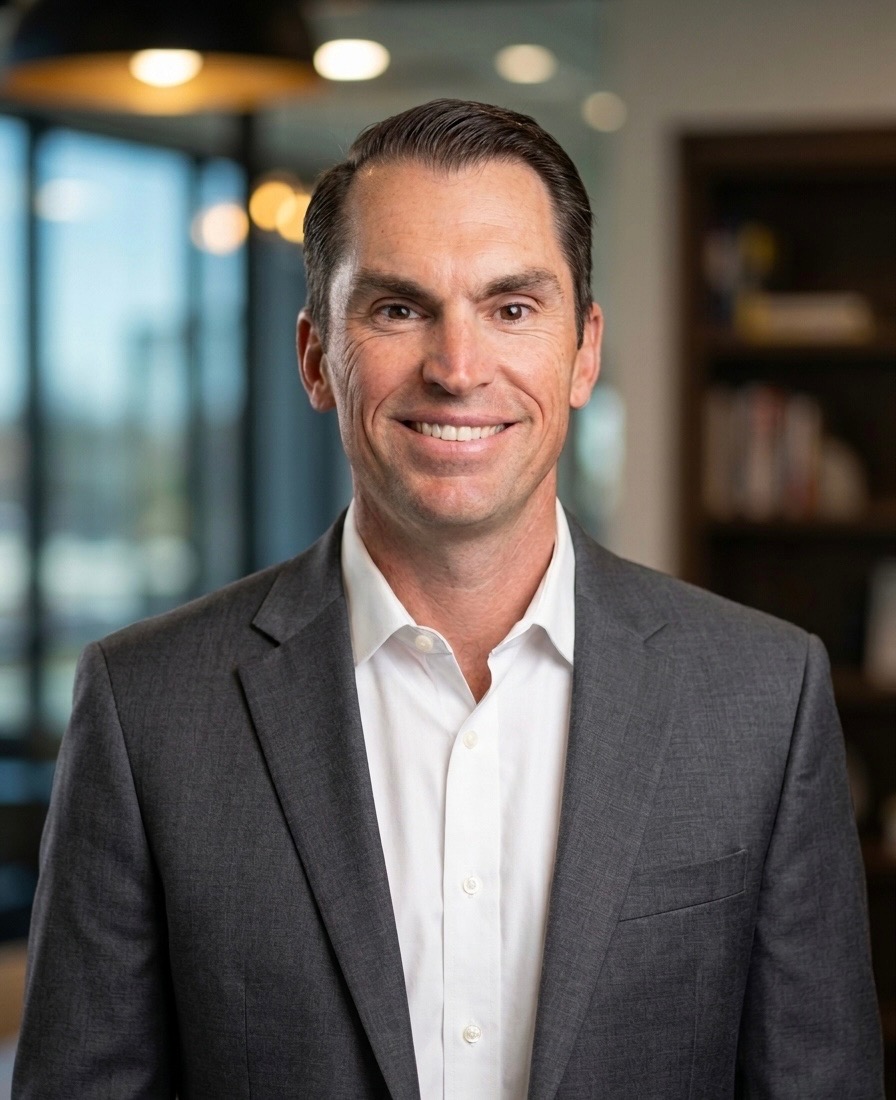
YOUR ADVISOR
Chris DeCarolis
Senior Commercial Insurance Advisor
Chris DeCarolis is a Senior Commercial Insurance Advisor at Coverage Axis. His experience in commercial risk placement started in 2007. He has helped contractors, trades, and specialty businesses build coverage programs that fit their operations — specializing in general liability, workers comp, commercial auto, and umbrella programs for high-risk industries. Chris holds a Florida 220 General Lines license (G038859) and is a graduate of Brown University.
COMMON QUESTIONS
Frequently Asked Questions
Distributed by tier: low-severity ($1K-$15K, most common), mid-severity ($15K-$100K), high-severity ($100K-$1M+, rare). Mid- and high-severity drive most dollar exposure.
Training programs, pre-work hazard identification, quality control on completed work, subcontractor management, and active claim handling. Well-implemented programs reduce frequency 30-50% over 2-3 years.
Severity drives most paid dollars (often 60-80% of total claims paid). Frequency drives the experience modifier. Both matter, but the severity tail is what tests policy limits and umbrella stacking.
Best-in-class Real Estate Developers run 20-30% below segment average on loss ratio. Worst-in-class run 50%+ above. The performance gap usually reflects operational discipline and safety investment.
Yes, through the 3-year experience modifier window. Claims roll out of the window at their 3-year anniversary; the impact diminishes over time absent new claims.
GET STARTED
Get a Free Insurance Review
Tell us about your business and a licensed advisor will recommend the right coverage.
Get My Free Review →GET STARTED
Tell Us About Your Business
Fill out the form below and a licensed advisor will review your situation and recommend the right coverage — no obligation.